
Rethinking Fashion’s Obsession With New
In conversation with Idris Arab-Tani, Chief Executive Officer at TURN Paris
by Raffaella Loncao
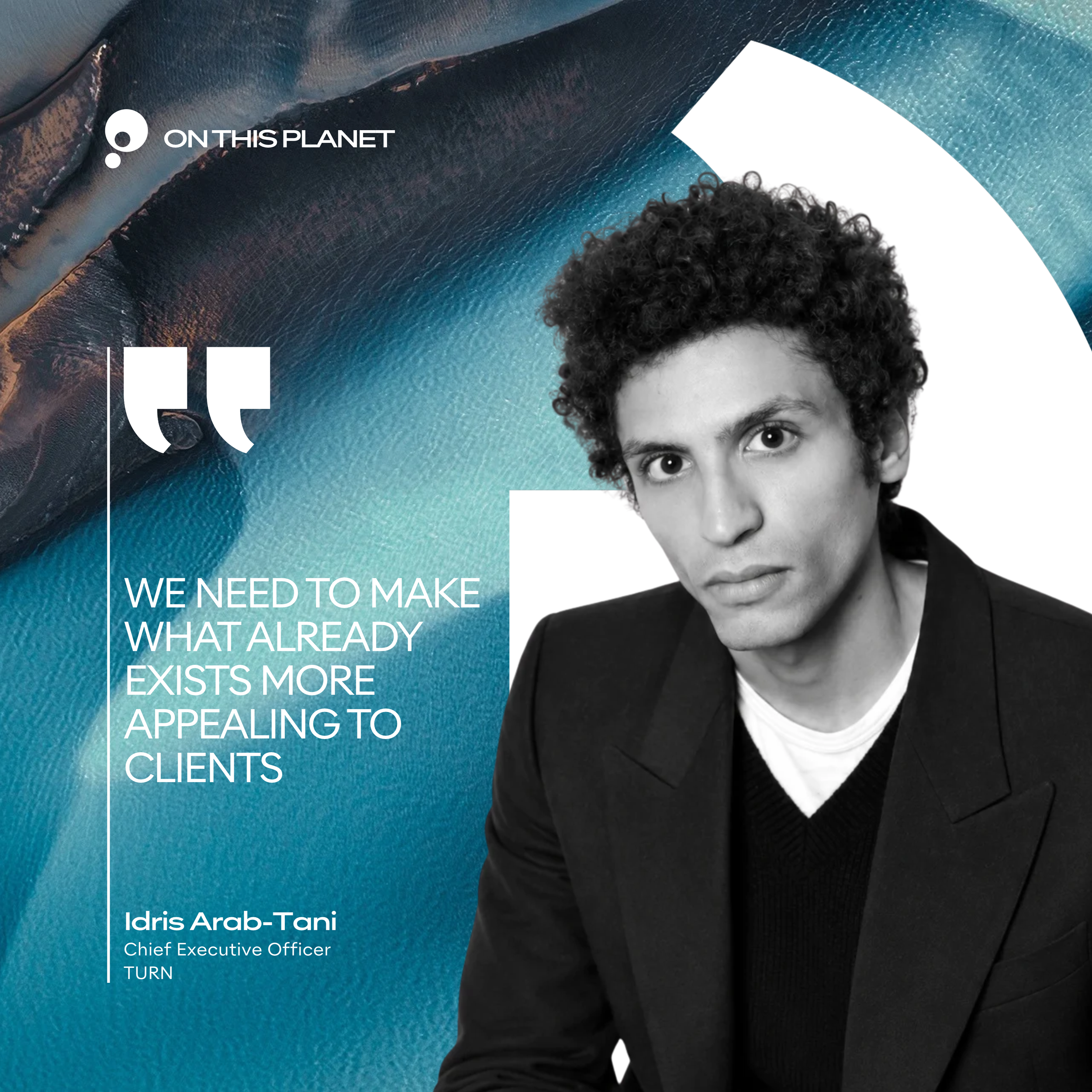
Idris Arab-Tani and I first met when he was busy travelling around the world, helping Courrèges develop into a global fashion house.
He is now the CEO and partner of Paris-based TURN. But make no mistake, despite his title, he takes our call from a stockroom, surrounded by beautiful vintage garments. His feet are very much on the ground.
When I ask him to share more about the concept behind TURN, he says: “Fashion has always been obsessed with what comes next. People are crazy about novelty.”
The pressure to keep producing novelty is built into the rhythm of the industry, and for Idris, it sits at the heart of one of fashion’s biggest contradictions.
“If you want to have an impact in our industry, you have to produce less and make the things that already exist more appealing to your clients.”
TURN began in Paris as a vintage project and has since evolved into a brand where vintage and its own ready-to-wear collections live alongside each other. Its philosophy is captured in a phrase TURN’s founder and creative director Clara Hofer-Maire uses to describe its approach: “curating new rather than creating new.”
The distinction is important to Idris. TURN searches for forgotten pieces and designers, then brings them back into circulation through a contemporary point of view. The product may already exist, but the styling, context and way it is presented can make someone look at it differently.
For a clientele that loves fashion, the experience still has to feel fresh. The question for TURN is how to satisfy that desire without assuming that every new idea requires another new product.
A Different Kind of New
Idris’s interest in circularity started several years ago. During his time at Courrèges, where he worked as Chief of Staff to the CEO across strategy and business development, sustainability was very much embedded in his role. During his time there, the house established a partnership with Vestiaire Collective to encourage customers to give existing Courrèges pieces a second life, an initiative that connected naturally with his own longstanding interest in vintage.
At TURN, that thinking has moved closer to the centre of the business model. Around half of what the brand offers is its own line, produced in limited quantities in Europe. The rest draws on vintage and second-hand pieces selected and styled through TURN’s particular Parisian lens.
There is a commercial paradox in resale that interests him. Someone who sells a piece from their wardrobe to a second-hand or vintage outlet may still use the money they earned from the sale to buy something new. Circularity therefore exists within the same fashion economy that continues to depend heavily on consumption.
Idris does not pretend that contradiction is easy to resolve. Instead, he talks about being transparent about what a business does and making deliberate choices about how much it produces. Styling becomes part of that equation. The same garment can be presented differently, combined differently and made relevant again without another product having to be manufactured. The creative challenge shifts from constantly asking what else can be produced to asking what can be done with what already exists.
Producing Less Is Harder Than It Sounds
There is a tendency to think of producing less as the simpler option. Idris sees almost the opposite. Creating another product can be relatively easy. Producing deliberately requires knowing the economics of every piece, setting the right price, understanding the factory, controlling quantities and making something well enough that people actually want to keep it.
It also means selling through what has already been produced rather than relying on the next collection to create another commercial moment. This is where sustainability becomes inseparable from running the business well. For Idris, the discipline sits in understanding margins and products closely enough to avoid unnecessary overproduction while still creating a brand people desire.
His biggest challenge today is preserving TURN’s creative freedom while building a profitable company.
Quintessentially Parisian
Idris’s definition of success for TURN is grounded in an old difficulty in fashion: making beautiful clothes while building a profitable business around them. When he talks about what that could look like, he goes back to Paris. He mentions the energy of brands such as Agnès b., Sonia Rykiel and Isabel Marant: businesses that developed a recognisable French attitude without relying only on the traditional codes of a large luxury house.
What Idris wants TURN to build is similarly cultural as well as commercial: beautiful products, strong content and a point of view people recognise. The Parisian attitude matters. So does profitability. He has no romantic idea that creativity can survive indefinitely without a functioning business behind it. The challenge is finding a model in which commercial discipline protects creative independence rather than gradually eroding it.
Seeing What Is Possible
That belief in independence is also connected to Idris’s own story. Growing up, he saw education as a way to change his life. That path eventually took him to Sciences Po and into finance, strategy consulting and later fashion.
Working side by side with the CEO at Courrèges gave him permission to think differently about the person and leader he could become. “By seeing him, I knew what was possible.” There is something very concrete in that description of mentorship. Sometimes possibility becomes easier to imagine once you have seen another person embody it.
His own career has crossed investment banking, strategy consulting and fashion, and he now considers that movement between industries an advantage. The advice he would give his younger self is to be less afraid of it. “Don’t be afraid to work in different industries. Listen to your intuition and follow the people you admire.”
Looking Outside Fashion
Idris is curious about what happens beyond the industry in which he works. For a leader working in an industry that constantly looks at itself for the next trend, there is value in deliberately looking elsewhere.