
Why Sustainability Needs a Cultural Shift
In conversation with Alexia Tronel, Co-Founder RACINE
by Raffaella Loncao
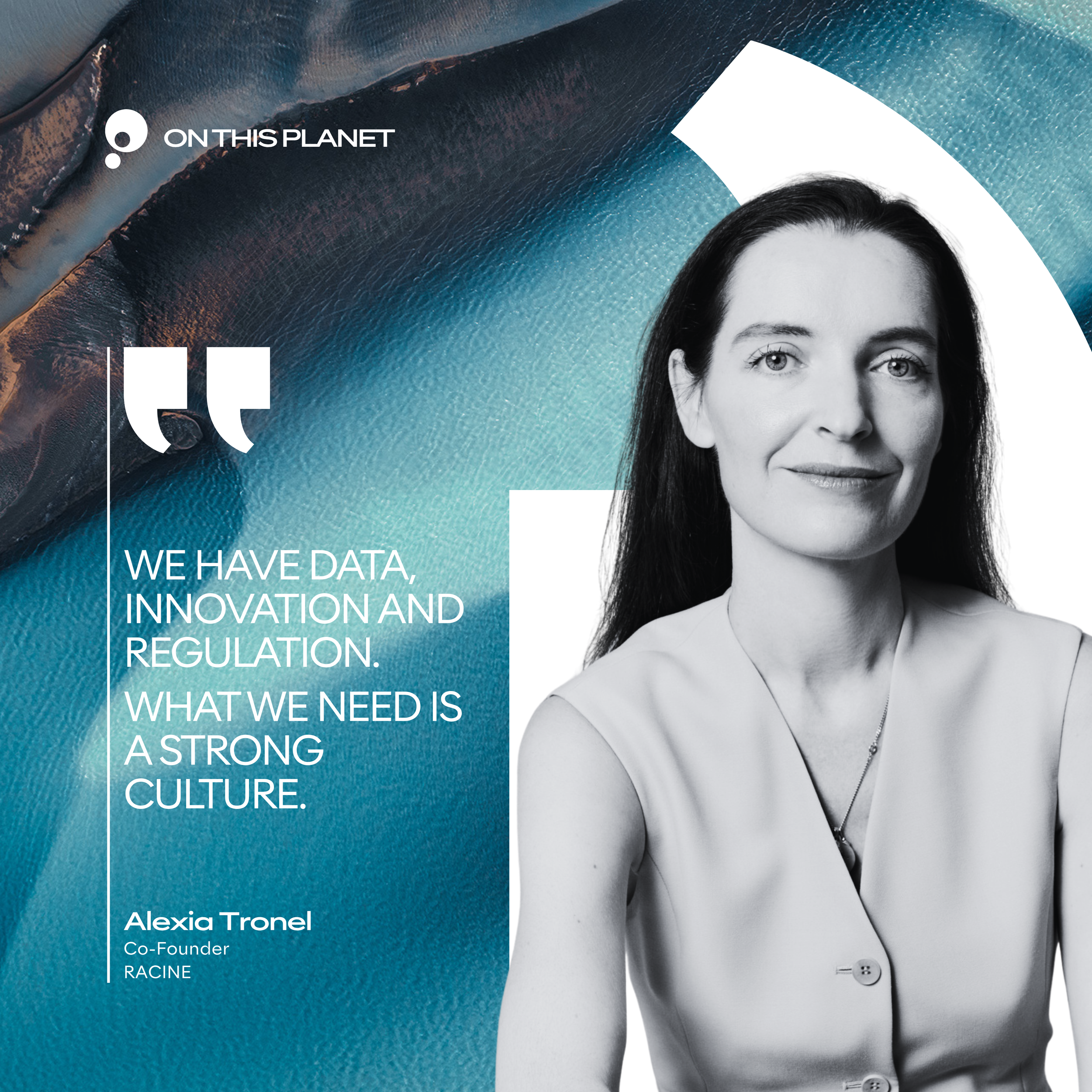
Alexia and I met last year at a Women in Sustainable Luxury event, and I was immediately drawn to her radiant personality. After founding and running her own luxury brand for almost eight years, today she advises organisations on sustainability and transformation. She has taught luxury and sustainability at HEC Paris, ESSEC and Sup de Luxe, and co-founded RACINE, a multidisciplinary collective exploring possible futures for luxury and creation.
We begin our conversation with a question: what does success mean to you? Alexia is not particularly interested in status or financial recognition. What interests her is what happens to an idea once it leaves the room, whether someone else defends it, carries it into another conversation or allows it to influence a decision. As someone who teaches alongside her advisory work, she also thinks about the ideas her students will take into their careers and what might continue to develop long after the person who introduced them is no longer there.
Alexia describes this as transmission. “My ideas change decisions, I think of it like planting seeds that will create change.”
When Sustainability Is No Longer the Story Everyone Wants to Hear
Alexia has worked around sustainability for long enough to have watched the conversation change around her. “In the past, when I spoke about sustainability, people loved it. Today, it is not necessarily the story they want to hear.”
The change comes at an interesting moment. Companies have access to more environmental data, regulation, technical expertise and innovation than they did a decade ago, yet sustainability is encountering greater resistance in parts of the political, economic and cultural landscape. Social media can obscure the extent of those divisions because algorithms tend to surround us with people who share our interests and assumptions, making our own view of the world appear more universal than it really is.
For people working in sustainability, the consequence is uncomfortable but important. Speaking primarily to those who already share the same convictions will only take the movement so far. Alexia describes the territory beyond that familiar community as “foreign ground”, and much of her work today is concerned with understanding how to operate within it without compromising the ideas she wants to advance.
“How do you take the language of finance, creativity, desire, science, and build a bridge to reach this community?” The choice of language is central to her thinking because different parts of an organisation can look at exactly the same issue and see something entirely different. A designer may approach sustainability through creativity, desirability and the integrity of a product, while a compliance team sees regulation, risk and measurable impact. Neither perspective is inherently wrong, but neither can transform the business in isolation.
The Missing Piece Is Culture
For years, organisations have invested heavily in the technical infrastructure required for sustainability. Data has improved, regulation has become more sophisticated, new tools and innovations have emerged, and sustainability teams themselves have developed considerable expertise. Alexia believes that the cultural infrastructure required to make those changes part of everyday business has received far less attention.
“We have data, tools, innovation and regulation. What we need is a strong culture,” she tells me. For Alexia, that culture begins by connecting sustainability to things people already understand and value, whether that is clean water, walking in nature or a love of animals. These experiences may have little to do with the vocabulary of ESG, but they belong to the same underlying conversation about our relationship with the natural world.
When sustainability becomes dominated by terminology understood primarily by specialists, the risk is that it creates distance from the very people whose decisions and behaviour will ultimately determine whether change happens. The work is therefore not simply to communicate the same message more loudly, but to understand what matters to the person on the other side of the conversation and find the language through which the idea can reach them without losing its substance.
Keeping the Mission, Changing the Language
Alexia does not underestimate how difficult the next stage may be. She expects sustainability budgets to remain under pressure, while political and cultural resistance may make some organisations more cautious about how they communicate their ambitions. She explains her response through an image: “If need to cross a river, I need to choose the right moment.”
The destination remains the same even when the route towards it has to change. Alexia’s approach to change has also been shaped by her interest in Chinese philosophy, particularly its understanding of transformation as something that can happen gradually rather than through confrontation. She talks about paying attention to context and timing, recognising when the conditions are right to move and when it may be wiser to wait. In sustainability, where resistance can easily harden positions, this has influenced the way she thinks about bringing people with her rather than simply pushing harder against them.
For anyone trying to create change, this creates a delicate balance between adaptation and compromise. Alexia talks about protecting “the core of the idea” while allowing the method around it to evolve. The argument that resonates with a finance team may bear little resemblance to the conversation that engages a designer or a customer, because each is approaching the subject from a different set of priorities and experiences. Changing the language does not necessarily mean changing the ambition behind it.
This willingness to look beyond the established vocabulary of sustainability also informs RACINE, the collective she co-founded with Elisa Niemtzow and Margot Lorphelin, to explore possible futures for luxury and creation.
Looking at Luxury From the Roots
RACINE means “root” in French, and the name captures the intention behind the project. Rather than beginning with the immediate sustainability agenda, the collective brings together people from different disciplines and cultures to examine some of the deeper assumptions on which luxury has been built and consider how those values might evolve.
Much of the modern corporate sustainability movement has developed through Western institutions, regulation and intellectual traditions, while other cultures offer different ways of thinking about time, nature, value and change. RACINE gives creative, technical and cultural perspectives room to coexist rather than forcing them immediately into a single framework.
For luxury, that conversation has particular relevance. The industry has always been built around more than products and economics; imagination, culture, craftsmanship and desire are fundamental to the way value is created. Technical solutions can reduce environmental impact, but changing what the industry values, celebrates and ultimately chooses to produce also requires a shift in culture.
The same tension between conviction and adaptation appears when our conversation turns to leadership. Alexia speaks about the ability to maintain a sense of direction when the environment around you is moving in another one.
Leadership When the Current Is Against You
Sustainability already has institutions, governance structures and a substantial body of expertise behind it, but none of those structures removes the possibility of resistance or backlash. There will be periods, Alexia believes, when people trying to create change find themselves working against the prevailing current, and navigating those moments requires enough judgement to know when to push, when to adapt and when to wait without losing sight of where they are trying to go. It also requires the internal compass she has relied on throughout her own career: “When you wake up in the morning, you have to think about what you do as a person, as a professional and as part of society.”
For Alexia, that compass has often been instinct, guiding choices across entrepreneurship, teaching, advisory work and projects that did not necessarily follow a conventional professional path. Looking back, she wishes she had trusted it earlier. “Trust yourself,” is the advice she would give her younger self, which she distinguishes from simply believing that you have a good idea. She is talking about the deeper confidence required to continue giving an idea your energy when the environment around you becomes less receptive to it. “To believe in yourself is the most important leadership skill.”
The Life of an Idea
Alongside her advisory work, Alexia has spent years teaching sustainability, fashion ethics and luxury, as well as working on projects connecting artisans, changemakers and brands across Mediterranean countries. She does not measure the value of that work by whether people reproduce exactly what she taught them, but by whether the idea continues to live once it has left her hands.
Some ideas will be challenged, while others will be adapted to a different organisation, culture or generation. A student may carry one into a career, a colleague may use it to influence a decision, or a community may take it somewhere the person who first introduced it could never have anticipated. Transmission requires accepting that an idea may evolve as other people make it their own.
Photo credit @clemencelouisebiau